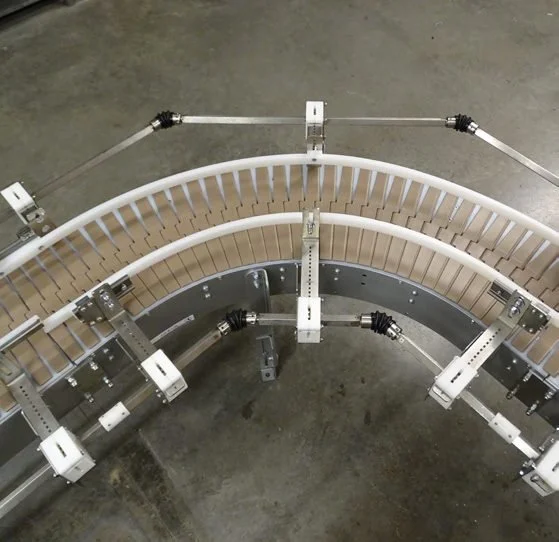
Belt Conveyors in Houston, TX — The Most Versatile, Economical Powered Conveyor
Transportation, elevation change, and accumulation on one proven platform. Lone Star Automated Systems designs, supplies, and installs flat belt, V-guided, and incline belt conveyor systems for warehouses, packaging plants, and production lines across Texas.
One Belt Handles Regular and Irregular Loads Alike
Belt conveyors are the most commonly used powered conveyor because they are the most versatile and least expensive. Product rides directly on the belt surface, so regular and irregular shaped objects — large or small, light or heavy — can all be transported successfully, and package spacing and orientation stay constant from infeed to discharge.
Belt conveyors transport product in a straight line or through changes in elevation and direction, and in certain applications they can also provide static accumulation of cartons. From short machine-integration pulls to 40-foot transportation runs, a belt conveyor is usually the first powered conveyor to consider.
Need help choosing between belt and live roller conveyor, or between powered and gravity conveyor? Our engineers will match the technology to your product, rates, and budget.
Slider Bed vs. Roller Bed: What Carries the Belt Matters
Every belt conveyor supports its carrying belt one of two ways — on a smooth solid surface, or on rollers. The right choice comes down to load weight, run length, and noise and cost targets.
Belt Conveyor Configurations We Design & Install
From general transportation to sanitary food-grade lines and steep elevation changes, we spec each conveyor around your product, rate, and environment.

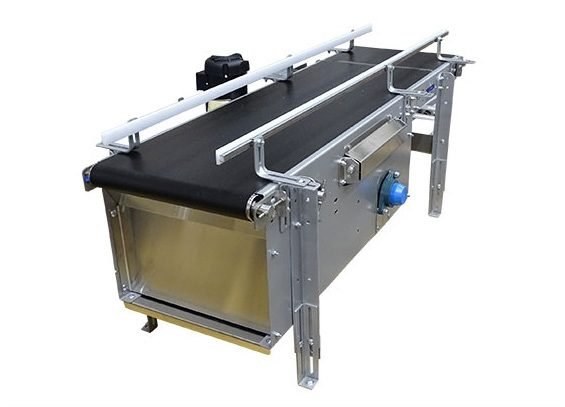
Flat Belt Conveyor
Heavy-duty, low-cost, low-maintenance, quiet-running transportation — the workhorse of powered conveying, with incline solutions available.
Typical range: widths 4"–24" • lengths 27" to 40' • speeds 15–200 FPM • center or end drive • flat, incline, decline, or trough configurations • food-grade, friction-top, PVC, and flighted belting options.

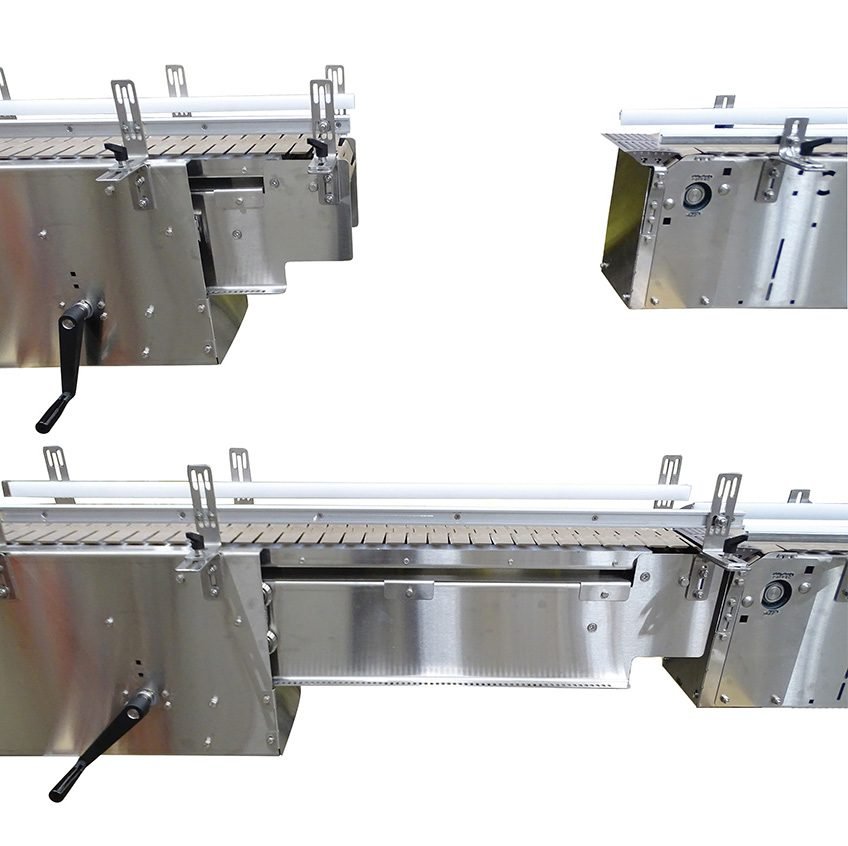
Guided Belt Conveyor (V-Guided)
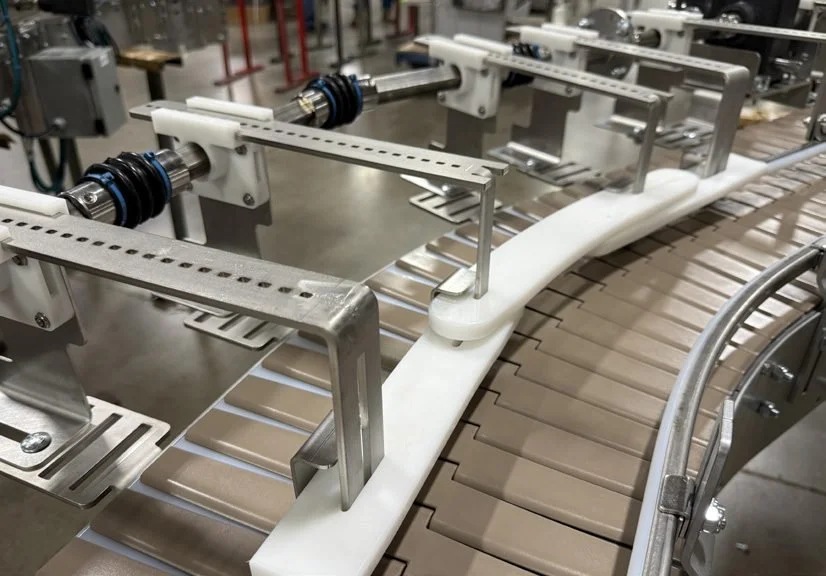
A self-tracking, V-guided belt in a compact stainless frame — built for short pulls, tight machine integration, and sanitary environments where belt tracking can't drift.
Typical range: widths 6"–24" • lengths 27" to 15' • speeds 15–180 FPM • stainless steel construction • FDA food-grade white polyurethane, blue friction-top rib, PVC, and flighted belting.

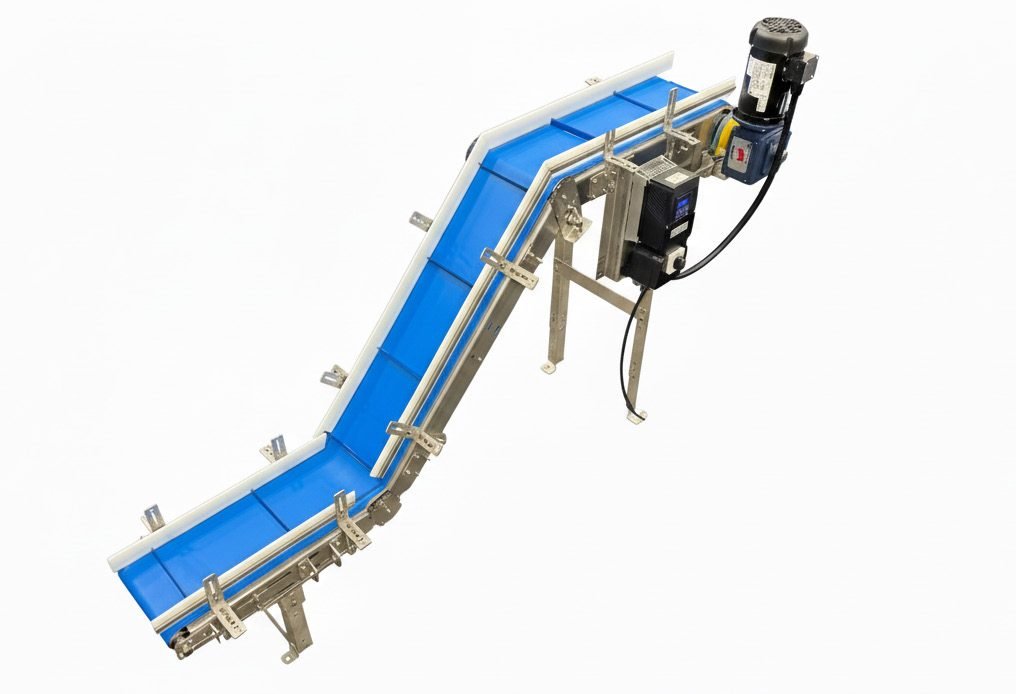
Z-Frame Incline Belt Conveyor
An affordable, low-maintenance elevation change with minimal controls and no changeover — carry product up or down between levels while preserving floor space for operator and forklift access.
Typical range: belt widths 12"–24" • elevation changes 18" to 15' • speeds 15–170 FPM • incline angles of 30°, 45°, and 60° • up or down configurations.

Flighted & Cleated Belting
Cleats and flights molded into the belt hold product securely on steep inclines and declines that smooth belts can't manage — ideal for small parts, packages, and bulk product moving between elevations.
Common uses: steep incline transport • preventing rollback on declines • metering product into hoppers, scales, and packaging machinery.
Where Belt Conveyors Do the Heavy Lifting
Move cartons and totes between departments in straight runs up to 40 feet per section.
Inclines, declines, and Z-frames carry product between floor levels, over aisles, and onto mezzanines.
Feed case packers, checkweighers, and wrappers with constant spacing and orientation.
FDA food-grade belting and stainless construction for sanitary and washdown environments.
Bags, bundles, and odd-shaped items that rollers and wheels can't carry ride cleanly on a belt.
In the right applications, belt conveyor doubles as a low-cost carton accumulation surface.
Houston's Belt Conveyor Partner — Engineered, Supplied, Installed
We represent leading conveyor manufacturers — including modular systems designed by Nercon engineers — so your line is built from proven equipment instead of a costly custom start-up, with fast turnaround on standard configurations.
Belt Conveyor FAQs
What is a belt conveyor?
A belt conveyor is a powered conveyor that moves product on a continuous belt driven by a motorized pulley. Because product rides directly on the belt, it handles regular and irregular shapes alike — large or small, light or heavy — while keeping package spacing and orientation constant. It's the most commonly used powered conveyor because it's the most versatile and least expensive.
What is the difference between a slider bed and a roller bed?
The difference is what supports the belt. A slider bed supports the belt on a smooth solid pan — quieter and lower cost, best for light-to-medium loads. A roller bed supports the belt on rollers, which reduces friction so the same drive can carry heavier loads over longer runs.
Can belt conveyors move product up an incline?
Yes — belt conveyors are the standard solution for elevation change. Smooth belts typically handle inclines up to about 15°; steeper angles of 30°, 45°, and even 60° use flighted (cleated) belting or Z-frame incline conveyors that move product between levels while using very little floor space.
Are food-grade belt conveyors available?
Yes. We supply belt conveyors with FDA-approved food-grade belting options — including white polyurethane and blue friction-top rib belts — plus stainless steel construction for washdown and sanitary environments in food, beverage, and consumer product plants.
Does Lone Star Automated Systems install belt conveyors in Houston?
Yes. We're headquartered in Houston, TX and provide layout, design, supply, and installation of belt conveyor systems throughout Houston, the Gulf Coast, and all of Texas — from a single transportation section to complete integrated lines with controls. Call 713-532-4444 for a quote.
Belt Conveyor Design & Installation Across Texas
Lone Star Automated Systems is headquartered at 2500 Citywest Blvd., STE 150, Houston, TX 77042 and serves manufacturers, distributors, food and beverage plants, and warehouses throughout the Gulf Coast and statewide.
Ready to Spec Your Belt Conveyor Line?
Tell us what you're moving, how fast, and where it needs to go. We'll recommend the right bed style, belting, and drive — and quote standard or custom configurations.
713-532-4444